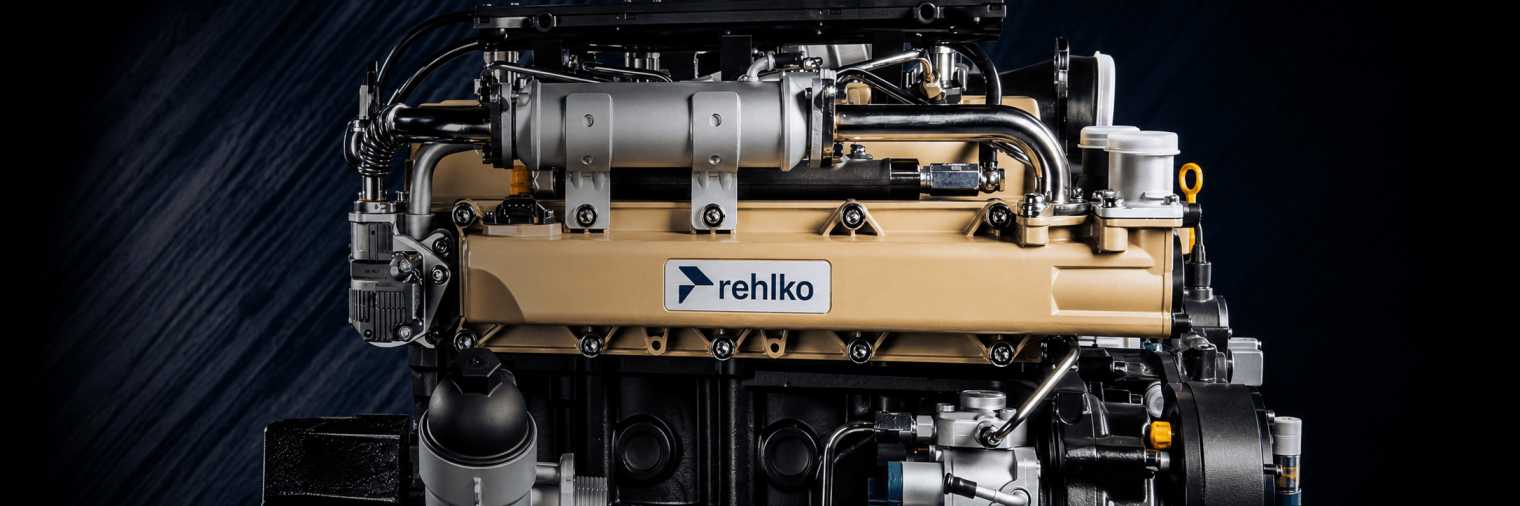
For projects that run longer and hotter, liquid-cooled diesel engines step in, covering roughly the 8.6 kW to 47.0 kW band. The liquid cooling isn't just a spec sheet detail. It's what lets an engine hold steady output during a Gulf summer without derating or shutting down mid-shift. At the top of the range, air-cooled diesel engines scale further still, going up to around 105 kW for larger stationary and industrial setups.
Where does this range actually get used? Mostly in three places:
• Construction and civil infrastructure sites needing standby or prime power for equipment
• Oil and gas facilities where engines run for extended, unattended stretches
• Utilities and water pumping stations that can't afford unplanned downtime
Why the cooling method is a bigger decision than it sounds
Here's something that trips up a lot of first-time buyers: assuming air-cooled is simply the "cheaper" option and liquid-cooled is the "premium" one. That's not quite right. Air-cooled diesel engines are lighter, have fewer components to maintain, and are often the better call for mobile or intermittent-use equipment. Liquid-cooled units, on the other hand, are built for continuous duty cycles where heat has nowhere to escape except through a proper cooling loop.
The real question isn't which is better. It's which matches how the equipment will actually run. A generator that cycles on and off a few times a day has very different thermal demands than one running a desalination pump around the clock.
Why diesel engines from Rehlko keep showing up on UAE job sites
Sigma Enterprises has been the authorized distributor for
Rehlko engines and genuine spare parts in the UAE, working alongside the brand's broader push into power generation across the region. That difference carries more weight than it seems at first read. An authorized distributor isn't just selling a box with an engine inside; it comes with access to genuine spare parts, factory-backed technical support, and a supply chain that doesn't dry up when a part is needed urgently.
For a client running critical infrastructure, that last point is the one that actually keeps operations running. An engine failure at 2 a.m. on a remote site isn't a spec-sheet problem, it's a logistics problem. Having a local partner who stocks genuine components and understands the full lineup, from the smaller Command Pro range through to the larger liquid-cooled units, changes how fast a site gets back online.
What buyers usually get wrong
A recurring mistake in engine selection is buying based on peak power alone, without checking how the unit performs under sustained load. A few things worth checking before committing to a diesel engine:
• The actual duty cycle of the equipment it will power, not just its rated capacity
• Ambient operating conditions, since heat and dust affect air-cooled and liquid-cooled units differently
• Long-term parts availability, since diesel engines are often run for a decade or more
None of this is complicated once it's laid out, but it's the kind of detail that gets skipped when a purchase decision is rushed.
The bottom line
Diesel engines aren't glamorous equipment. Nobody photographs them for a project brochure. But they're often the single component standing between a site running smoothly and a costly delay. Rehlko's diesel lineup, spanning air-cooled and liquid-cooled configurations from just over 2 kW to more than 100 kW, gives buyers in construction, oil and gas, and utilities a genuine range to match the job rather than force-fitting one engine size to every application.
If there's one takeaway worth carrying forward, it's this: the engine that looks right on paper isn't always the one that runs right on-site. That gap is usually closed by matching the cooling method and power band to the actual working conditions, not the other way around.
Sigma Enterprises works with clients across the UAE to specify, supply, and suppor